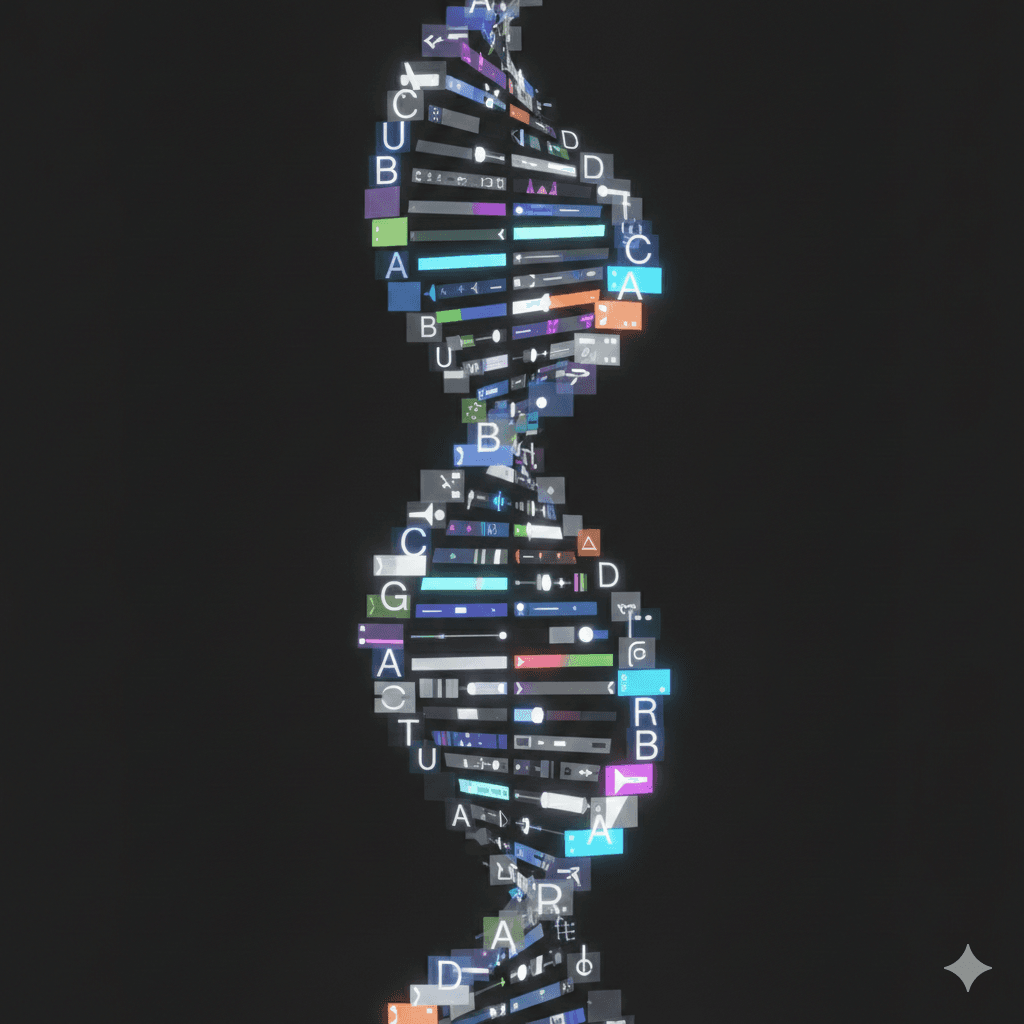
Digital Fossils: Will Today's Websites Become Antiques by 2050?
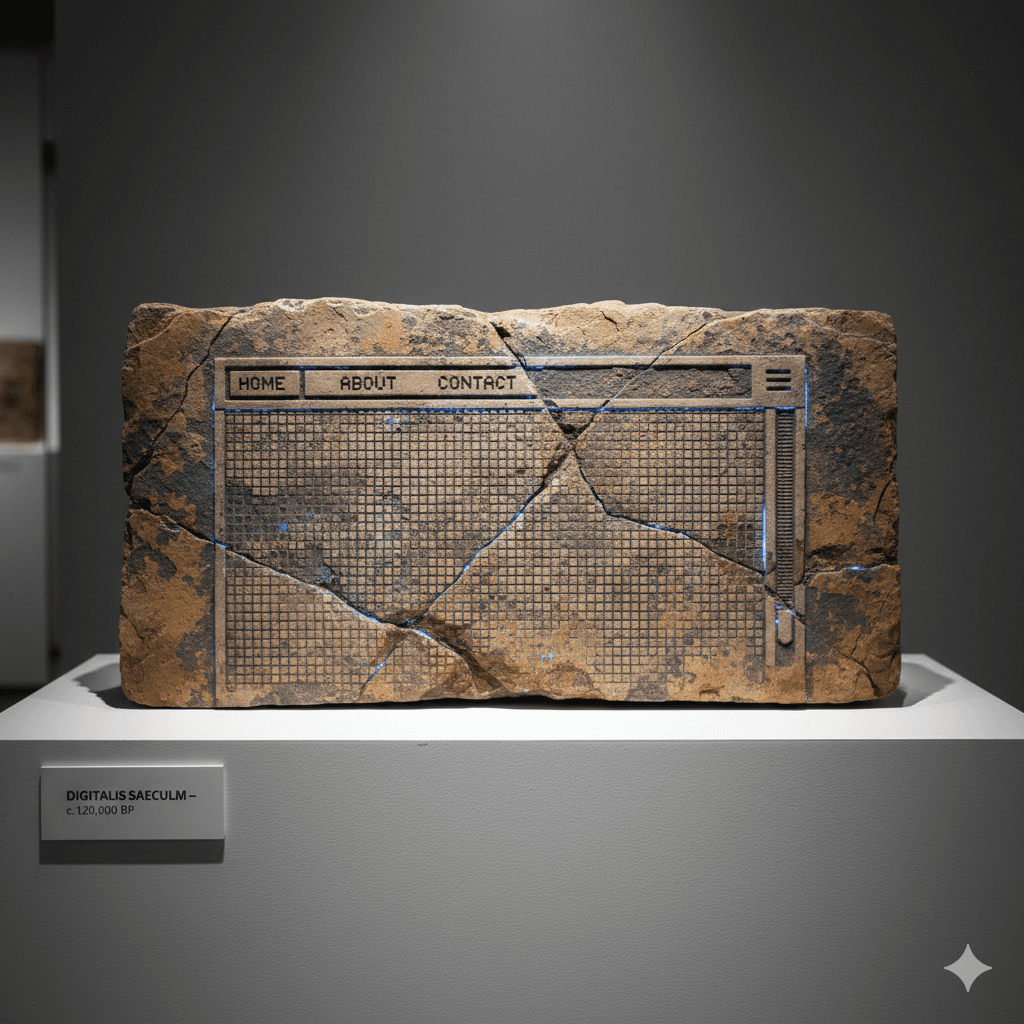
The Digital Erosion of Time
Think about a website you visited in 2024. Glass-effect cards, smooth transitions, dark theme, minimal typography. Now recall a GeoCities page from 1999: blinking GIFs, visitor counters, "Under Construction" icons.
What happened in those 25 years? And more importantly: 25 years from now, in 2050, will someone look at our "modern" designs and laugh?
This question isn't just aesthetic curiosity. It forms the foundation of an emerging discipline called digital archaeology. And the answers reveal surprising clues about the future of web design.
The Fossil Record of the Web: The Wayback Machine
The Internet Archive's Wayback Machine has stored snapshots of over 835 billion web pages since 1996. This is humanity's largest digital fossil record.
But just as a paleontologist can't find fossils of every organism, the Wayback Machine can't capture every website. Researchers estimate that approximately 38% of websites created between 2000 and 2010 have been completely lost. Flash-based sites, dynamic content, and projects hosted on private servers vanished into the dark ages of digital history.
This loss isn't merely nostalgic. Every lost site takes with it a design philosophy, a user experience approach, and a piece of its era's digital culture.
Architectural Movements and Web Design Eras
Just as we date physical architecture into Gothic, Baroque, and Art Deco periods, web design has its own distinct eras:
The Primitive Period (1991–1996)
Tim Berners-Lee's first web page consisted of plain text and hyperlinks. There was no concept of "design" — only information transfer. These sites are like handprints on cave walls: primitive but revolutionary.
The Age of Exploration (1997–2003)
Table-based layouts, frames, animated GIFs. Everyone was a web designer, and the rules hadn't been written yet. Platforms like GeoCities, Angelfire, and Tripod hosted millions of personal sites.
We laugh at these sites today, but the experimentalism that seeded Web 2.0 germinated in this period. Without that chaotic, rule-breaking energy, today's elegant designs couldn't exist.
The Corporate Period (2004–2011)
Web standards, CSS-based layouts, and a "professional" look. Gradients, shadows, glossy buttons. Apple's skeuomorphic design philosophy spread everywhere. Digital buttons looked like real buttons; folders looked like real folders. Design tried to mimic the physical world.
The Flattening (2012–2017)
Microsoft's Metro design and Google's Material Design flattened everything. Shadows disappeared, colors simplified, typography took center stage. Flat design was revolutionary — but it also stripped the web of some personality. Every site started looking the same.
Neo-Expressionism (2018–Present)
Glassmorphism, neomorphism, 3D elements, micro-animations, dark themes. After the flattening, the web regained depth — but this time systematically, through design systems and established principles.
Today's Trends, Tomorrow's Optical Illusions
Here's the truly interesting question: which of today's "modern" design patterns will become antiques by 2050?
Glassmorphism: The frosted glass effects we find sleek today will likely be viewed like the gradients of the 2000s. "Oh, they used to make everything semi-transparent back then."
Dark Theme Obsession: Dark themes save energy on OLED screens, but as display technology evolves, the dark/light distinction may become meaningless. For e-ink or holographic displays, the concept won't even apply.
The Hamburger Menu: Three horizontal lines. Everyone knows what it means today, but few know the symbol was actually designed for the Xerox Star in 1981. By 2050, with voice and gesture-controlled interfaces, the very concept of a menu might be fossilized.
Infinite Scroll: Endless scrolling was designed to maximize content consumption. As digital wellness awareness grows, this pattern might be remembered as "a tool of addiction engineering" — much like how we view cigarette advertisements today.
The Digital Dark Age: Lost Data
Google's former vice president Vint Cerf introduced the concept of a "digital dark age" in 2015. His concern: when digital formats become obsolete, today's data will become unreadable.
The death of Flash Player in 2020 made this fear tangible. Tens of thousands of interactive web experiences, games, and animations became inaccessible overnight. While platforms like Newgrounds and Internet Archive rescued some using the Ruffle emulator, the vast majority were lost forever.
What about today's JavaScript frameworks? React, Vue, Angular... Will these technologies still be runnable 30 years from now? Or will they share Flash's fate?
Webpack configurations, npm dependency trees, API integrations — today's web applications have so many external dependencies that any broken link can collapse the entire system. In software engineering, this is called "dependency rot."
Designs That Passed the Test of Time
Interestingly, the longest-lived websites have generally been the simplest ones:
Craigslist — Looking nearly identical since 1995. Pure HTML, minimal CSS, zero JavaScript. Living proof of the timelessness of function-driven design.
Wikipedia — Essentially the same since 2001. Perfect information architecture, minimal visual decoration. Content has always come before design.
Google's Homepage — Minimalist since 1998. One search box, two buttons. The fundamental formula hasn't changed in over 25 years.
These examples reveal a truth: function-driven designs outlive trend-driven designs by a significant margin.
What Will Web Archaeologists of 2050 Find?
Future digital archaeologists looking at today's web will likely note:
"The Primitive Personalization Era: In the 2020s, websites showed everyone the same interface. Designs that adapted to a user's mood, context, or cognitive load had not yet been developed."
"The Screen Dependency Age: Remarkably, all digital experiences in this period were confined to rectangular screens. Spatial computing and brain-computer interfaces were still experimental."
"The Manual Coding Period: Developers coded interfaces line by line, by hand. AI-powered autonomous design systems were still in their infancy."
What Can We Do Against Digital Fossilization?
Some strategies for making your web projects stand the test of time:
Practice progressive enhancement. Core functionality should work without JavaScript. HTML and CSS are far more durable technologies than any framework.
Keep your dependencies minimal. Every added library is a potential weak link that can break in the future. Use only what you truly need.
Write semantic HTML. Semantic markup ensures content remains understandable even as technology changes. Tags like <nav>, <article>, and <aside> are readable by AI and future browsers alike.
Archive your content regularly. Save static copies of your website periodically. Relying on the Wayback Machine alone isn't enough.
Conclusion: Every Website Is a Time Capsule
Looking at digital fossils teaches us valuable lessons for today:
Trends have short lifespans. When choosing a design pattern, it's worth asking "Will this still be meaningful in 10 years?" Content always outlives design. Even the most beautiful interface is eventually forgotten, but valuable content continues to serve as reference. And simplicity is timeless — as Craigslist and Google have proven, function-driven design beats fashion.
Ultimately, every website is a time capsule. Just like the columns of ancient Rome, today's pixels will one day become silent witnesses to history.
The question is: what story will your digital fossil tell?
Sıkça Sorulan Sorular
What is a digital fossil?
A digital fossil is a web design pattern, coding practice, or digital platform that has become obsolete due to technological changes. GeoCities sites, Flash animations, and table-based layouts are all examples of digital fossils.
Why do websites become obsolete?
Websites become obsolete due to technological changes (like Flash support ending), evolving design trends, browser compatibility issues, and shifting user expectations. The average website lifespan is 3-5 years.
Why is web design history important?
Understanding web design history helps you grasp why current trends emerged, predict future trends, and avoid repeating past mistakes in your own design projects.
Can websites be digitally preserved?
Yes, tools like the Wayback Machine (web.archive.org) archive old versions of websites. Digital preservation projects also save screenshots and source code of significant websites.
What is glassmorphism and when did it become popular?
Glassmorphism is a design trend using semi-transparent glass effects, gaining popularity in 2020-2022. It uses backdrop-filter blur to create a frosted glass look, adding depth to modern interfaces.
Dijital dünyadan haberdar olun
En güncel dijital pazarlama ipuçları ve trendleri için bültenimize abone olun.