Digital DNA: Is Your Brand Identity Embedded in Every Cell of Your Website?
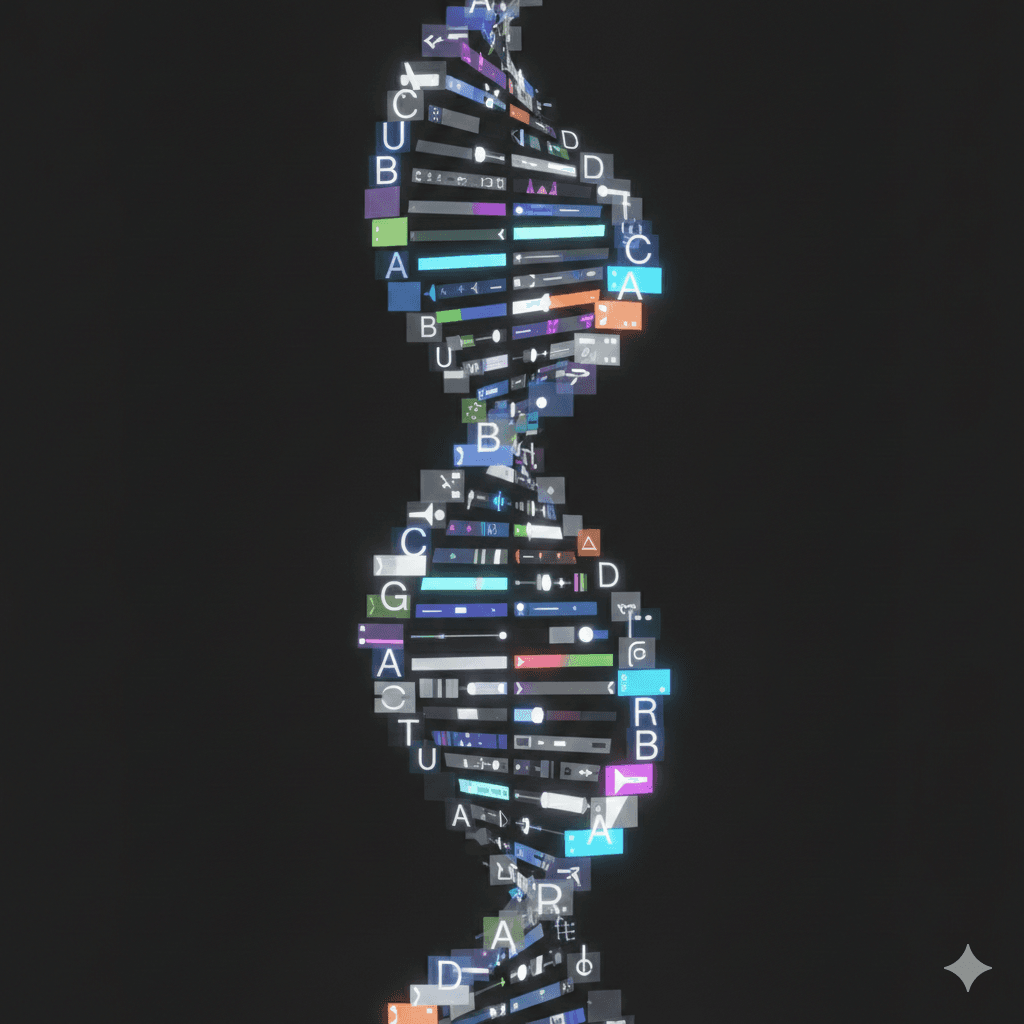
When you open a website, your subconscious makes hundreds of decisions in the first few seconds. Are the colors familiar? Does the typography feel trustworthy? Will the buttons take me where I need to go? All these decisions are shaped by that brand's Digital DNA.
In biology, DNA carries the same genetic information to every cell of an organism. In the digital world, your brand identity serves the same function: it creates a consistent experience at every touchpoint, from your website to your social media posts, from your email signature to your invoice design.
What Is Brand DNA?
Brand DNA is the complete set of core components that form a brand's visual and emotional identity. Just as biological DNA consists of four bases (A, T, G, C), digital brand DNA consists of four fundamental elements:
- Color Palette — The emotional tone of the brand
- Typography — The voice and character of the brand
- Visual Language — Photography style, illustration, iconography
- Communication Tone — Writing style, form of address, personality
When these four elements work harmoniously together, users recognize your brand even without seeing your logo.
The Cost of Inconsistency
According to Lucidpress research, consistent brand presentation increases revenue by an average of 23%. Looking at it from the other side, inconsistency carries a serious cost:
- When users see 3 different shades of blue on your site, trust erodes
- Using a friendly tone on social media but corporate language on your website creates confusion
- Different button styles across pages raises the question "Is this site professional?"
Real-world example: If an e-commerce site has a modern, minimal homepage but product pages that look like they're from 2010, the user's subconscious asks "Is this really the same company?" — and trust cracks.
The 4 Core Bases of Your DNA
1. Color Palette: Emotional Coding
Color is the visual information the brain processes fastest. A brand color palette should include:
- Primary color: Used in logo and main CTAs
- Secondary color: For accents and supporting elements
- Neutral tones: For backgrounds, text, dividers
- Status colors: Success (green), error (red), warning (yellow)
Tip: Encode your color palette with a design token system. Use CSS custom properties or Tailwind config to guarantee the same colors across all your projects.
2. Typography: The Visual Form of Voice
Typography isn't just about "choosing a readable font." Your font choice reflects your brand's personality:
- Serif fonts (Times, Georgia) → Tradition, trust, authority
- Sans-serif fonts (Inter, Outfit) → Modernity, cleanliness, accessibility
- Display fonts (Syne, Playfair) → Character, boldness, distinction
What's critical is consistency: one font for headings, another for body text, and their weight/size hierarchy must be the same across all pages.
3. Visual Language: From Photography to Icons
Visual language tells how your brand "sees the world":
- Are photos natural or studio-shot?
- Are illustrations flat, 3D, or hand-drawn?
- Are icons outlined or filled?
- Is visual filtering consistent? (Warm tones, cool tones, black and white)
4. Communication Tone: Digital Body Language
Your website's copy forms your brand's voice:
- Formal vs. informal address — Professional or friendly?
- Sentence length — Short and punchy, or detailed and explanatory?
- Jargon usage — Technical terms or everyday language?
- Emoji/exclamation usage — Energetic or calm?
5 Common DNA Mutations in SMBs
- Logo variability: Using different logo versions on every platform
- Color drift: Using #FF6B35 on the website, #FF8C42 on social media
- Font chaos: Using more than 5 typefaces
- Tone mismatch: Being corporate on LinkedIn, too casual on Instagram
- Template dependency: Using a different Canva template for each campaign, creating inconsistent visual language
10-Question Digital DNA Test
Test your website's brand consistency:
- Is your logo the same size and position on all pages?
- Is your color palette limited to 3-5 colors?
- Do you use a maximum of 2-3 font families?
- Are button styles (size, color, border radius) consistent?
- Does the photography/visual style create a cohesive whole?
- Do page headings follow the same hierarchy?
- Is spacing systematic or random?
- Do mobile and desktop experiences convey the same brand feeling?
- Do even your error pages (404, 500) match your brand?
- Could a new team member extend the existing design consistently?
7+ Yes: Your DNA is strong — small improvements can take you to perfection.
4-6 Yes: Some mutations exist — creating a brand guide is essential.
0-3 Yes: Serious DNA repair needed — we recommend professional support.
Conclusion: Protect Your DNA
Brand consistency isn't a luxury — it's a prerequisite for survival in the digital age. Every pixel, every word, every interaction carries your brand's DNA.
Remember: Users experience your brand in fragments — in a Google search, an Instagram story, an email. All these fragments must tell the same story.
Want to analyze and strengthen your brand's digital DNA? <a href="/iletisim" class="text-foreground underline underline-offset-4 hover:text-foreground/70 transition-colors" target="_blank" rel="noopener noreferrer">Contact us</a> for a free brand consistency analysis.
Frequently Asked Questions
How long does it take to create Brand DNA?
A comprehensive brand identity study takes 2-4 weeks. However, adapting your existing identity for digital can be completed in 1-2 weeks.
Why is brand consistency important for small businesses?
Small businesses can't advertise with big budgets. A consistent brand identity is the most effective way to build maximum trust with limited resources.
Can we improve brand consistency without redesigning our website?
Yes! By establishing color tokens, font standardization, and a brand guide, significant improvements can be made even on your existing site.
What is a design token system?
A design token is a system that stores design decisions like color, font, and spacing as code. This ensures the same values are used across all platforms (web, mobile, email).
Frequently Asked Questions
What is digital DNA?
Digital DNA refers to consistently embedding your brand's core identity elements—color palette, typography, visual language, and communication tone—across every page of your website, just as biological DNA carries the same information to every cell.
Why is brand consistency important on a website?
Brand consistency builds trust, creates a professional impression, and increases brand recognition. Inconsistent design and messaging creates distrust among visitors and reduces conversion rates.
What are design tokens?
Design tokens are a system for managing design values like color codes, font sizes, and spacing from a single centralized source. They ensure consistency across all pages and simplify design updates.
How do you create a brand guide?
A brand guide documents logo usage, color palette, typography, visual style, communication tone, and application rules. It ensures consistency across your website, social media, and all digital assets.
How do you test brand consistency on a website?
Compare different pages side by side for color, font, tone, and visual style consistency. Conduct user tests and analyze page-level performance differences through analytics data.
Stay updated with digital trends
Subscribe to our newsletter for the latest digital marketing tips and trends.